YOUR BRAND OUR EXPERTISE
SZX CUSTOMIZED SPORTING SOLUTIONS
YOUR BRAND OUR EXPERTISE
SZX CUSTOMIZED SPORTING SOLUTIONS
Mga mesa ng table tennis nakapalagay sa labas kaya madalas na napapahina ng kalikasan sa paglipas ng panahon, lalo na kung hindi ito ginawa para tumagal sa mga kondisyon ng panahon. Kapag paulit-ulit na nababasa ang kahoy, ito ay madalas na umuupong at lumalaki, na maaaring makaapekto sa paraan kung paano tumatalbog ang bola—ayon sa Sports Engineering Journal, ang mga pag-aaral ay nagpapakita na ito ay nakaaapekto sa pagkakapare-pareho ng pagtalon ng bola ng mga 40% pagkalipas lamang ng kalahating taon. Ang sinag ng araw ay nagpapaputî sa mga kulay at nagpapabulok sa mga plastik na hindi ginawa para tumagal sa UV rays, samantalang ang mga pagbabago ng temperatura sa pagitan ng malamig na gabi at mainit na araw ay nagdudulot ng mga pukyâ sa mga ibabaw na hindi tamang pinagtratrabaho. Ang lahat ng mga kadahilanang ito kapag pinagsama-sama ay nangangahulugan na ang mga mesa para sa labas ay karaniwang tumatagal ng 3 hanggang 5 taon na mas maikli kaysa sa mga mesa na nasa loob. Ang mga problema tulad ng mga nangangalawang koneksyon o mga umuupong ibabaw ng mesa ay hindi lamang nakakainis kundi tunay na mapanganib kapag aktibong naglalaro ang mga tao. Ayon sa Ponemon Institute, ang pagpapalit ng nasirang kagamitan sa sports na para sa labas ay nagkakahalaga ng average na $740,000 bawat taon. Kaya naman, ang pag-invest sa tamang proteksyon laban sa panahon ay makatuwiran—parehong para sa patuloy na katarungan sa laro at upang maiwasan ang mga aksidente. Ang pagpili ng mga materyales na idinisenyo partikular para sa gamit sa labas ay hindi lamang isang matalinong desisyon sa negosyo, kundi mahalaga rin para sa sinumang gustong magkaroon ng mesa na tatagal sa buong panahon nang walang paulit-ulit na pagre-repair.
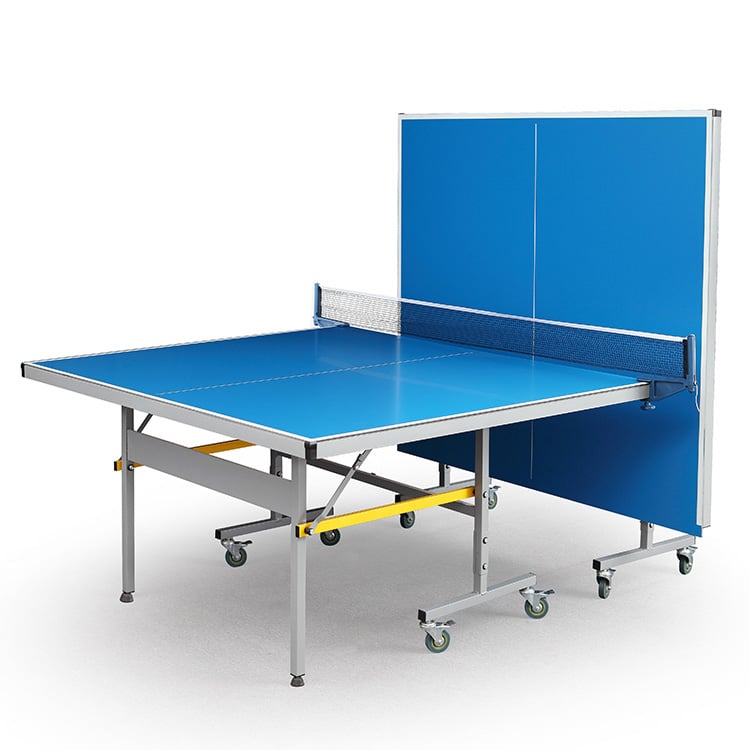
Ang mga outdoor na table tennis table sa mataas na dulo ng merkado ay karaniwang may aluminum composite panels na pinagsama sa resin-laminated na ibabaw. Ang mga materyales na ito ay idinisenyo upang tumagal laban sa mga bagay tulad ng pinsala mula sa UV, pagpasok ng tubig, at mga pagbabago dulot ng init at lamig. Ang resin ay gumagawa ng makinis na waterproof na patong na sumusunod talaga sa ISO 2812-2 na pamantayan para sa paglaban sa ulan. Samantala, ang pangunahing materyales ay nananatiling matatag kahit magbago ang temperatura, kaya’t hindi gaanong lumalukso o nababaluktot ang table kahit sa ekstremong kondisyon. Ang ilang independiyenteng pagsusuri ay nakakita na ang mga ibabaw na ito ay panatag na nagpapanatili ng kanilang katangian sa pagtalon, na may kaunting pagbabago lamang na humigit-kumulang sa 2% kahit matapos nang ma-expose sa simulated na panahon sa loob ng 3,000 oras. Ang ganitong antas ng pagganap ay malayo nang mas mahusay kaysa sa inaasahan ng karamihan mula sa karaniwang outdoor na kagamitan.
Ang mga premium na outdoor table ay umaasa sa matibay na bakal na nakapalo na may zinc bilang pangunahing istruktura nito. Ang paraan ng hot-dip galvanization ay karaniwang pinipili kumpara sa electroplating dahil ito ay gumagawa ng matibay na layer ng zinc na may kapal na humigit-kumulang 60 hanggang 100 microns. Ang coating na ito ay nagsisilbing proteksyon na mismong nawawala kapag inilantad sa oksiheno—na nagpipigil sa pagkakabuo ng rust. Kapag sinubok ayon sa pamantayan ng ASTM B117, ang mga table na ito ay nagpapakita ng napakahusay na resistensya sa salt spray nang higit sa 1000 oras nang tuloy-tuloy. Ang ganitong antas ng tibay ang nagbibigay-daan para gamitin ang mga ito kahit sa mga lugar kung saan palaging mataas ang antas ng halumigmig o malapit sa baybayin. Para sa dagdag na proteksyon, ang mahahalagang bahagi tulad ng mga bolts, hinges, at mga punto ng stress kung saan ang mga bahagi ay umiikot ay binibigyan ng karagdagang suporta mula sa mga komponenteng gawa sa stainless steel. Ito ay tumutulong na pigilan ang corrosion nang eksaktong sa mga lugar kung saan ito pinaka-kritikal matapos ang mga taon ng regular na paggamit.
Ang mga powder coating na idinisenyo para sa pang-panlabas na paggamit ay mas mahusay kaysa sa karaniwang pintura dahil sa paraan kung paano nagkakabond ang mga molekula nito pati na rin sa ilang napakahusay na pormulasyon ng kemikal. Kapag inilalapat gamit ang mga elektrostatis na pamamaraan at saka iniihaw sa temperatura na humigit-kumulang 200 degree Celsius (na katumbas ng humigit-kumulang 392 Fahrenheit), ang mga coating na ito ay sumisiksik sa mga ibabaw nang halos sampung beses na mas mainam kaysa sa mga karaniwang likidong pintura. Ang kanilang tunay na kahinaan ay ang kabilisang pag-unat nito. Maaari itong umunat mula sa 6 hanggang 8 porsyento bago magpakita ng mga bitak kapag nagbabago ang temperatura araw-araw. Bukod dito, may mga espesyal na sangkap ding hinalo upang pigilan ang halos lahat ng mga sinag ng UV mula sa pagdaan, kaya walang natitirang manipis na alikabok, pagkawala ng kulay, o pagkabrittle ng ibabaw sa paglipas ng panahon. Ang mga pagsusuri sa laboratorio na pabilisin ang proseso ng pagtanda ay nagpapakita na ang mga coating na ito ay nananatiling karamihan ng kanilang kislap kahit matagal nang nakalagay sa labas sa loob ng limang taon.
Ang mataas na kalidad na mga mesa para sa labas ay kasama ang mga espesyal na sistema ng drainage na idinisenyo partikular para maiwasan ang pumasok na tubig. Kasama rito ang mga iba’t ibang elemento tulad ng mga miring na ibabaw, mga coating na pumipigil sa tubig, mga mikro-textured na pattern sa ibabaw, at mga lubhang malalakas na sambitan sa pagitan ng mga bahagi. Karaniwang may slope ang base nito ng hindi bababa sa 2 degree upang matulungan ang tamang pagdaloy ng tubig palabas. Ang ilang modelo ay may kasamang mga gutter na nabawasan ang pagkakabuo ng mga puddle sa paligid ng mga paa ng mesa ng humigit-kumulang 80 porsyento ayon sa mga pagsusuri. Lahat ng mga elemento ng disenyo na ito ay nangangahulugan na ang mga mesa ay sumusunod sa mga pamantayan ng industriya para sa paglaban sa pinsala dulot ng tubig (ASTM D714) at sa pagtitiis kapag inilalagay sa ilalim ng tubig (ISO 2812-2). Ang mga tagagawa ay nangangako na ang kanilang mga produkto ay kaya nang tumagal ng higit sa 500 oras ng kung ano nilang tinatawag na "sinimulang mga bagyo" sa mga kondisyon sa laboratorio bago pa man makita ang anumang palatandaan ng pagkasira.
| Tampok | Pangunahing Epekto | Pamantayan ng pagsubok |
|---|---|---|
| Pagsasama ng gutter | Bumabawas sa nakatayong tubig ng 80 porsyento | ISO 2812-2 |
| Micro-textured coating | Binabawasan ang pag-absorb ng tubig sa <0.5 porsyento | ASTM D714 |
| Pinalakas na mga Tahi | Nagpapigil ng pagbubulaklak sa 95% na kahalumigan | EN 71-3 (Kaligtasan) |
Ang mga mesa na nakalagay sa mga lugar na madalas mabigyang epekto ng malakas na hangin ay kailangang sumunod sa mga pamantayan ng ASCE 7-22 kapag harapin ang mga patakaran ng hangin na higit sa 90 mph. Ang paggamit ng mga base na gawa sa bakal na nababalot ng zinc kasama ang mga ankor na nakakabit sa lupa nang hindi bababa sa 16 pulgada ay nakapagpapataas ng katatagan laban sa pagbalikbalik ng mesa ng humigit-kumulang 70% kumpara sa pagbibigay lamang ng timbang sa ibabaw ng mesa. Mahalaga rin ang disenyo: ang pagkakaroon ng cross bracing sa pagitan ng mga paa at ang pagpapanatili ng sentro ng masa na mababa ay nakababawas ng paggalaw o pagyuko habang panahon ng bagyo sa baybayin ng humigit-kumulang 45%. Kapag itinatayo nang permanente sa mga lugar kung saan madalas tumama ang bagyo, ang mga pooting na semento na idinisenyo upang matugunan ang hangin na umaabot sa 130 mph ay naging lubos na kinakailangan. Ang mga pooting na ito ay tumutugon sa mga problema dulot ng wind uplift—na talagang nagdudulot ng humigit-kumulang walo sa bawat sampung kabiguan sa istruktura sa mga lokasyong ito ayon sa mga ulat mula sa mga lugar na nasira ng bagyo.

Kung nais mong matuto nang higit pa tungkol sa lamesa ng laro, maaari kang makipag-ugnay sa amin sa pamamagitan ng pag-iwan ng mensahe sa website, pagpapadala ng email, o pagtawag sa amin, at tutulong kami sa iyo.
Qiankou Village, Dongfeng Village committee, Xinxu Town, Huiyang Distric, Huizhou City, Guangdong Province, China.
Copyright © 2025 Huizhou Double Star Sports Goods Co., Ltd. All rights reserved. PATAKARAN SA PAGKAPRIBADO
 EN
EN
 AR
AR
 HR
HR
 CS
CS
 DA
DA
 NL
NL
 FI
FI FR
FR
 DE
DE EL
EL
 IT
IT JA
JA
 KO
KO
 NO
NO PL
PL PT
PT RO
RO
 RU
RU
 ES
ES
 SV
SV
 TL
TL
 ID
ID
 UK
UK VI
VI
 SQ
SQ
 HU
HU
 TH
TH
 TR
TR
 FA
FA
 MS
MS
 GA
GA
 IS
IS
 KA
KA
 BN
BN
 MN
MN
 NE
NE
 MY
MY
 KK
KK
 UZ
UZ
 Mga Maiinit na Balita