YOUR BRAND OUR EXPERTISE
SZX CUSTOMIZED SPORTING SOLUTIONS
YOUR BRAND OUR EXPERTISE
SZX CUSTOMIZED SPORTING SOLUTIONS
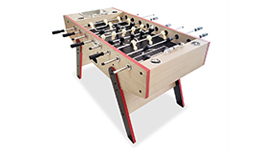
Regular foosball tables can be pretty dangerous around kids at home, mainly because of three big problems nobody talks about enough. Kids get their fingers caught between those spinning rods all the time. A recent study found that almost half (about 47%) of injuries from playing foosball actually come from crushed fingers or broken nails. Then there's the whole issue with those long metal rods sticking out. We've seen plenty of cases where kids bang into them and end up with cuts on their face or even eye injuries. And let's not forget about tables tipping over completely. Light models without proper support are especially bad for this since little ones tend to lean against them or climb up while they're mid-game. These dangers become even worse when different age groups are playing together. Younger kids just don't have the same reflexes or sense of space as adults do, which turns what should be fun family time into something potentially harmful if manufacturers haven't built in proper safety features from the start.
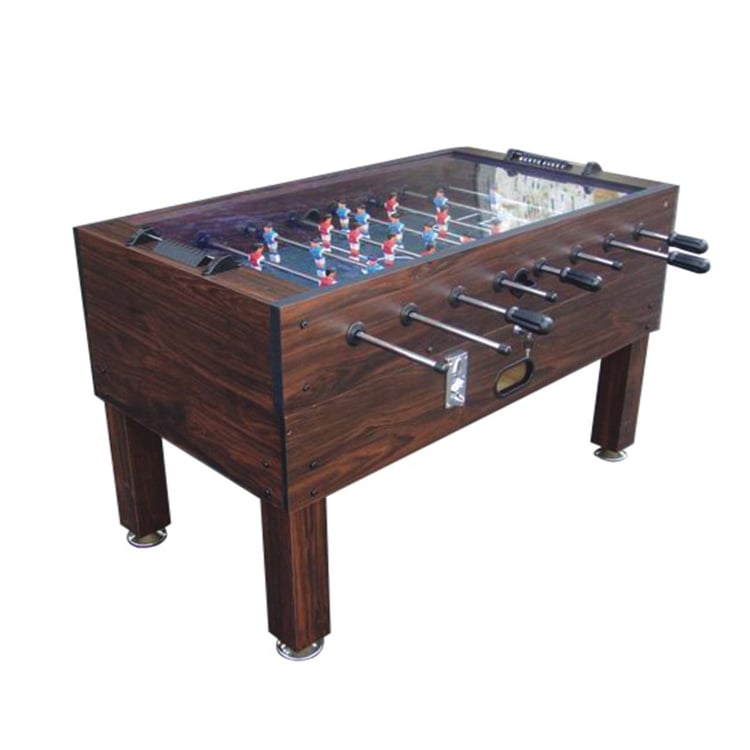
Today's family foosball tables come equipped with several important safety features that tackle common dangers. The telescoping rods automatically pull back when nobody's playing, which gets rid of those sharp ends sticking out and cuts down accidents significantly according to recent safety studies. To prevent fingers from getting caught, manufacturers have started using enclosed channels covered with protective sleeves. There's also at least 9mm space between all moving parts, plus handles shaped to resist impacts. Meeting ASTM F963 standards means these tables go through extensive checks for things like how strong they are, what materials are used, and potential mechanical issues. Products certified under this standard must pass around 23 different tests covering everything from stress on moving parts to how stable the table stays during play. All this adds up to real peace of mind knowing kids can enjoy without parents constantly worrying about injuries.
When designing foosball tables for kids, getting the ergonomics right matters a lot. The handles should be around 1.25 to maybe even 1.75 inches across so little hands from about age 5 up to 12 can grip them without any trouble or discomfort. Many manufacturers add rubber textures to these handles which helps stop fingers from sliding off during those intense back-and-forth games. Some studies on kid's hand usage show this cuts down on wrist tiredness by roughly 40 percent. The rods inside need low torque too, making them turn easily without much pushing required. This setup keeps fingers safe from getting pinched but still lets the game feel responsive when someone makes a move. And let's not forget about the actual player pieces themselves. When they're properly weighted, kids get better control over where the ball goes without sudden jerky motions happening. This kind of design actually helps build those important motor skills while keeping kids interested in playing longer.
Safety when it comes to materials just can't be ignored. Composite plastics that are free from BPA stop those harmful chemicals from getting into kids' systems during regular playtime. The corners are all rounded out and the seams have been properly sanded down so little hands won't get scraped up. These designs actually pass international safety standards such as ASTM F963 too. We also make sure all our paints and sealants come with third party certifications proving they're non toxic after all, kids tend to grab things and then put their fingers right in their mouths. Our scratch resistant coatings hold up against constant bumping around without losing strength or looking bad over time. Put all this together and what we get is a space where kids can play safely and still enjoy themselves without parents having to worry about hidden dangers.
A family foosball table endures spirited matches, accidental leans, and frequent repositioning—making structural integrity non-negotiable. Frame composition and reinforcement engineering directly determine stability, vibration dampening, and lifespan: all critical for energetic households.
What material we choose makes a big difference in how consistent the game feels and how much noise gets made. Plywood has those layered sheets that help it stay flat even when humidity fluctuates, plus it soaks up vibrations pretty well for regular home play sessions. MDF boards are great at cutting down sound because they're so dense, but watch out for spills since they'll warp permanently once wet, which isn't good for lasting quality. Hardwood lasts forever and handles impacts naturally, though it comes with heavier lifting requirements and higher price tags. Most households find that moisture resistant plywood works best overall. It keeps balls rolling predictably through fast back-and-forth rallies without making annoying rattles in the frame.
Strong leg designs keep tables from swaying dangerously when kids get rough with them during playtime. The corners have steel reinforcement and there's cross bracing across the frame that spreads out sideways forces which would otherwise make things unstable. Testing based on ASTM F963 standards shows tables built this way wobble about half as much after going through 5,000 simulated impacts from actual kid usage scenarios. Anti-tip feet can be adjusted to fit different floor types, especially helpful on those crooked surfaces at home or school. They come with rubber pads that grip better too. All these engineering fixes mean games stay stable throughout play sessions and parents don't have to worry about tables tipping over even when little ones jump around excitedly after scoring goals.
Finding the right foosball table means figuring out what works best for everyone in the house along with staying within what we can afford. Start by thinking about who will be playing most often. Little kids really need those adjustable rods and handles that are easier for small hands to grip without any harmful chemicals. Older kids might want something that feels closer to what they see in tournaments. Space matters too. If we have limited room, maybe look at tables around 48 inches long, but remember to leave plenty of space around it so nobody gets bumped when playing. Safety is super important, so check for those ASTM F963 ratings and avoid cheap particleboard frames unless we expect constant use. Budget-wise, there are three main categories: cheaper tables from $200 to $500 work fine for occasional fun, mid priced ones between $500 and $1200 tend to last longer and play better overall, and then there are the premium models over $1200 with extra sturdy construction that won't wobble during intense matches. Spending a bit more upfront usually pays off in the long run with fewer repairs and happier family game nights.
Common risks include finger injuries due to spinning rods, facial or eye injuries from metal rods, and potential table tipping when not properly supported.
Telescopic rods retract into the table when not in use, reducing the risk of injury from protruding rods.
ASTM F963 compliance ensures that the foosball table meets safety and quality standards, including material strength and stability, reducing the risk of injury.
Safe materials include BPA-free plastics and non-toxic, certified paints and sealants. Plywood or hardwood is preferred for durability and safety.
Handles with optimal grip diameter, textured non-slip surfaces, and low-torque rotation are designed for small hands, reducing the risk of slipping and injury.
Leg reinforcement and anti-wobble features enhance table stability, preventing tipping and reducing the risk of accidents during energetic play sessions.

If you want to learn more about the game table, you can contact us by leaving a message on the website, sending an email, or calling us, and we will provide you with help.
Qiankou Village, Dongfeng Village committee, Xinxu Town, Huiyang Distric, Huizhou City, Guangdong Province, China.
Copyright © 2025 Huizhou Double Star Sports Goods Co., Ltd. All rights reserved. Privacy Policy
 EN
EN
 AR
AR
 HR
HR
 CS
CS
 DA
DA
 NL
NL
 FI
FI
 FR
FR
 DE
DE
 EL
EL
 IT
IT
 JA
JA
 KO
KO
 NO
NO
 PL
PL
 PT
PT
 RO
RO
 RU
RU
 ES
ES
 SV
SV
 TL
TL
 ID
ID
 UK
UK
 VI
VI
 SQ
SQ
 HU
HU
 TH
TH
 TR
TR
 FA
FA
 MS
MS
 GA
GA
 IS
IS
 KA
KA
 BN
BN
 MN
MN
 NE
NE
 MY
MY
 KK
KK
 UZ
UZ
 Hot News